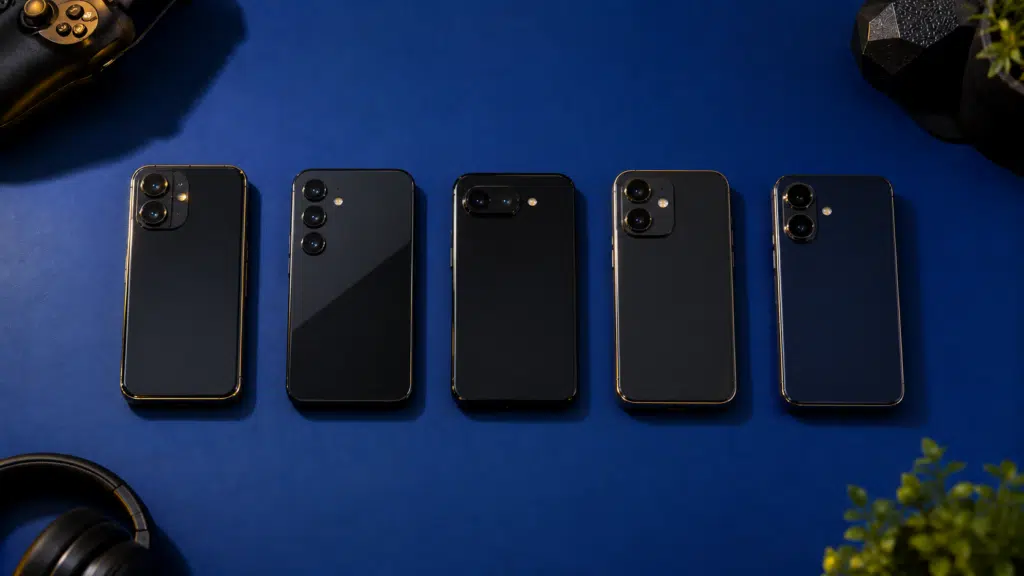
Best Compact Phones in 2026: 5 Top Small Picks Reviewed
Best compact phones in 2026 prove that you do not need to carry a massive, brick-sized device to experience elite flagship performance. For the longest time, choosing a smaller handset meant compromising heavily on battery endurance, thermal management, and camera versatility. Fortunately, massive leaps in processor efficiency and high-density cell structures have allowed manufacturers to pack top-tier hardware into highly pocketable frames. Finding a device that balances comfortable one-handed usability with uncompromised specifications requires evaluating actual everyday usage.
In this independent, human-reviewed guide, we closely analyze the top choices currently leading the UK and global markets. We put aside the biased manufacturer spec sheets to focus on real-world ergonomic comfort, daylight visibility, and sustained day-to-day processing execution.
Our Rigorous Selection Standards for the Best Compact Phones
To establish which pocket-friendly devices genuinely earn a position among the best compact phones, our comprehensive evaluation methodology moved completely away from automated benchmark software. Instead, our testing process involved carrying these pocketable devices through daily commutes, forced one-handed typing routines, and active multi-tasking workflows. We focused heavily on whether a device can be easily operated with a single hand without causing continuous muscle strain or accidental drops.
A smaller physical frame becomes entirely counterproductive if poor system engineering causes the device to overheat under standard daily tasks or drop its battery levels before late afternoon. While reviewing these sleek models, we thoroughly monitored sustained processing speeds, screen refresh adaptations under direct sunlight, and call reception quality. If you ultimately decide that a small frame does not suit your multi-media needs and you prefer a massive canvas for reading sheets or heavy split-screen multitasking, feel free to read our comprehensive review of the best foldable phones currently leading the industry.
Alternatively, if you require a traditional rigid device built entirely for long-lasting gaming marathons and maximum thermal cooling efficiency, feel free to explore our standalone guide to the best gaming phones. If you want to check how the latest high-density micro-component display configurations operate on a global level, you can cross-examine official hardware dimensions and panel metrics directly on the GSMArena hardware database portals.
1. Samsung Galaxy S26 (Spec Score: 96%)
For individuals seeking the ultimate balance of premium build quality and comfortable dimensions, this handset represents a phenomenal achievement. It securely leads the market for the best compact phones by offering a remarkably lightweight structure that completely avoids the bulky, fatiguing feel of modern ultra-flagships.
During our extensive outdoor display testing, the flat screen panel delivered exceptional contrast and crisp detail, remaining perfectly legible even under direct midday glare. The custom internal cooling assembly manages heat dissipation brilliantly, ensuring the device remains comfortable to hold during long video calls. Additionally, Samsung’s highly refined software skin offers excellent one-handed accessibility tools, making it incredibly easy to reach notification shades without shifting your grip layout.
- Global Pricing: $799 (US) / Approx. ₹74,999 (India)
- Hardware Metrics: 6.2-inch Dynamic AMOLED 2X (120Hz), Snapdragon 8 Gen 5 for Galaxy, 50MP Triple Camera Setup.
PROS: Incredibly comfortable ergonomic footprint, industry-leading screen glare reduction, extensive seven-year software support commitment.
CONS: Maximum supported wired charging speeds remain limited to 25W; the baseline model lacks ultra-wideband chip integration.
2. iPhone 17 (Spec Score: 95%)
Apple continues to dominate the premium small handset sector by focusing entirely on fluid day-to-day software performance and elite structural materials. The standard iPhone 17 comfortably cements its status among the best compact phones by delivering a highly refined user experience that requires zero continuous adjustments.
The upgraded aluminum sub-frame feels remarkably solid in the hand, easily resisting daily scuffs and drops without requiring a massive protective casing. In our real-world camera testing, the dual-lens system transitioned seamlessly between wide landscape shots and portrait capture, producing beautiful true-to-life skin tones. Furthermore, the incredible background processing optimization ensures that heavy applications load almost instantly without causing unexpected battery drain.
- Global Pricing: $799 (US) / Approx. ₹79,900 (India)
- Hardware Metrics: 6.1-inch Super Retina XDR Panel, Apple A19 Bionic Processor, Dual 48MP Camera Array.
PROS: Industry-leading software power management, highly consistent camera color calibration, lightweight and durable chassis materials.
CONS: The display refresh layer remains locked below standard fluid speeds; wired battery replacement metrics are mediocre.
💡 Tech Expert Tip: Want to see how these compact pocket powerhouses compare directly against specialized long-lasting battery setups? Open our interactive MobileRanks Compare Tool to view complete side-by-side technical sheets instantly!
3. Google Pixel 10 (Spec Score: 94%)
Google takes a distinctly software-driven, helpful approach to small-screen device engineering. The vanilla Pixel 10 stands out among the best compact phones by offering a remarkably clean user interface combined with elite computational photography pipelines that require zero professional knowledge.
Its primary strength lies in how beautifully the integrated AI sub-routines manage daily tasks, automatically filtering out spam calls and optimizing battery allocation behind the scenes. The primary camera lens captures astonishing dynamic range, pulling incredible detail out of dark shadows without introducing digital noise. It remains an ideal choice for users who favor flat, minimalist software layouts over heavy manufacturer skins.
- Global Pricing: $799 (US) / Approx. ₹79,999 (India)
- Hardware Metrics: 6.3-inch OLED Display (120Hz), Google Tensor G5 Core, Next-Gen AI Processing Architecture.
PROS: Superb point-and-shoot camera execution, clean stock software presentation, highly helpful integrated smart features.
CONS: The proprietary chipset architecture can run quite warm under long recording sessions; physical charging velocities are modest.
4. Xiaomi 16 (Spec Score: 93%)
If you refuse to compromise on premium zoom lenses simply because you prefer a smaller device, this model is an engineering marvel. It earns a well-deserved position among the best compact phones by packing a genuine floating telephoto lens into a highly streamlined frame.
Developed in close partnership with traditional optics experts at Leica, the camera array captures beautiful, high-contrast images that closely mimic professional analog film styles. In our daily usage tests, the advanced high-density battery cell comfortably outlasted most of its small-screen competitors, providing reliable multi-day standby performance. The symmetric thin bezel layout also ensures that every millimeter of the front panel is utilized cleanly.
- Global Pricing: Approx. $749 (US) / ₹64,999 (India)
- Hardware Configuration: 6.36-inch LTPO OLED, Snapdragon 8 Gen 5, Leica Professional Optical Lens Coating.
PROS: Exceptional telephoto camera flexibility, ultra-fast wired and wireless charging speeds, highly premium symmetric bezel aesthetics.
CONS: The international system interface contains several pre-installed applications; background notification management requires manual tuning.
5. Sony Xperia 5 VII (Spec Score: 91%)
Sony approaches the small-screen market from a dedicated creative enthusiast angle. The Xperia 5 VII stands out among the best compact phones by preserving rare legacy hardware elements, such as a physical 3.5mm headphone jack and an expandable micro-SD card slot block.
The unique, slightly taller display aspect ratio ensures the device remains exceptionally narrow, allowing your thumb to sweep across the entire horizontal keyboard effortlessly. The camera software mirrors professional alpha series interfaces, offering complete manual exposure control parameters for advanced creators. It is a brilliant, highly specialized tool for creators who demand complete manual freedom over their hardware setup.
- Global Pricing: $899 (US) / Approx. ₹79,999 (India)
- Hardware Configuration: 6.1-inch 21:9 OLED, Snapdragon 8 Gen 5, Physical Dual-Stage Camera Shutter Button.
PROS: Exceptional narrow form factor comfort, rare expandable storage and audio jacks, pro-grade manual camera controls.
CONS: Automated point-and-shoot photo processing can struggle in complex lighting; international carrier distribution is quite limited.
Before executing a final purchase decision on the best compact phones, analyze your daily media consumption habits and one-handed reach limits carefully.
🛒 Final MobileRanks Recommendation
Ultimately, selecting your ideal device from the best compact phones depends entirely on your ecosystem preferences and camera requirements. If you want a small-screen device that offers a long-term software commitment and elite display glare reduction, the Samsung Galaxy S26 is incredibly hard to beat. For users who prefer seamless third-party app integration and immaculate video stabilization inside a lightweight build, the standard iPhone 17 remains the ideal choice. Alternatively, if your focus is premium telephoto zoom flexibility and ultra-fast charging cycles, the Xiaomi 16 delivers exceptional value.